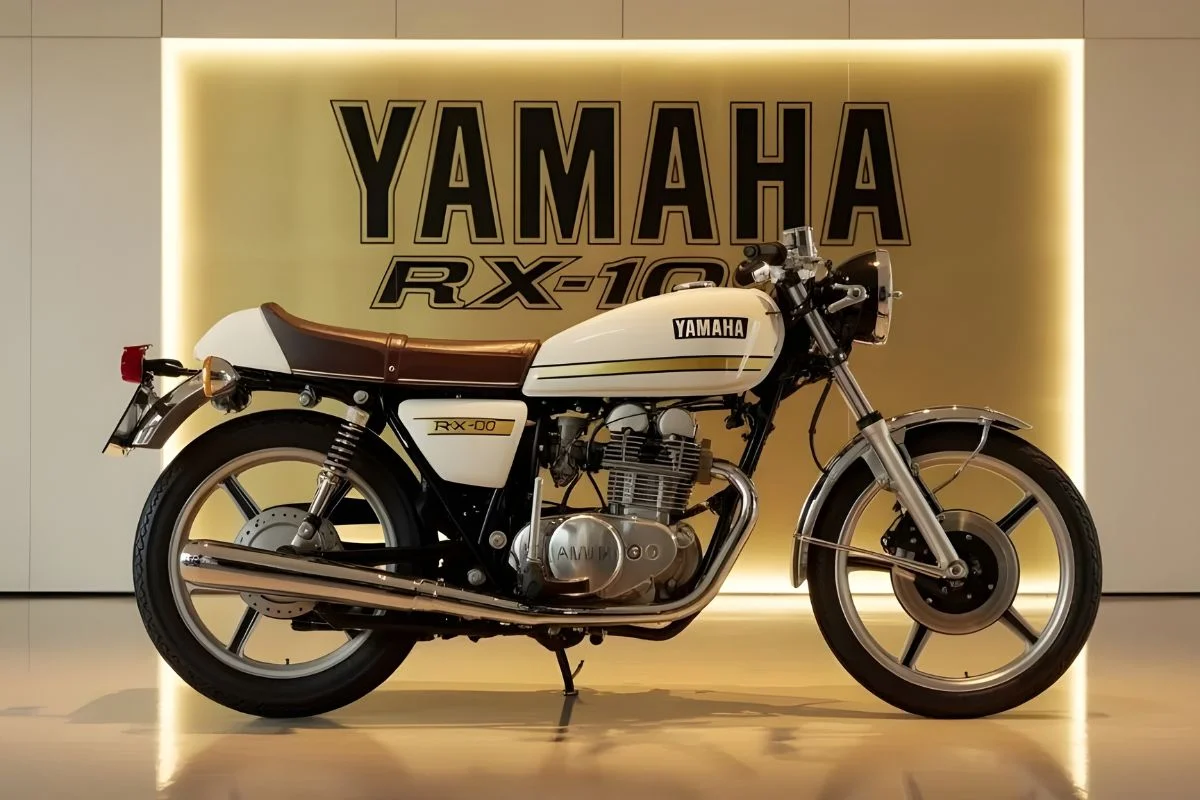
The legend is back in the headlines. The Yamaha RX 100 continues to dominate conversations among enthusiasts, collectors, and everyday riders who grew up idolizing its sharp exhaust note and lightweight agility.
At a time when modern bikes are loaded with tech and larger engines, the renewed buzz around the RX 100 proves something important: performance isn’t always about numbers. Sometimes, it’s about character. And few motorcycles in India have delivered as much of it as this iconic 100cc machine.
A Timeless Design That Still Turns Heads

The RX 100’s appeal begins with its clean, no-nonsense styling.
Compact and Lightweight Build
Weighing just 103 kg, the motorcycle feels incredibly light even by today’s standards. Its slim fuel tank, flat seat, and minimalist body panels create a classic silhouette that remains instantly recognizable.
With a seat height of 780 mm and a compact wheelbase, it’s easy to handle in city traffic. Riders of different heights find it approachable, which adds to its enduring popularity among both new and experienced bikers.
Engine Performance That Defined a Generation
Under the tank sits a 98cc, single-cylinder, two-stroke, air-cooled engine — the heart of the RX 100’s legacy.
Producing 11 bhp and 10.39 Nm of torque, the bike was known for its quick throttle response and lively acceleration. Paired with a 4-speed gearbox, it delivered a riding experience that felt raw, direct, and engaging.
Top speed? Around 100 km/h — impressive for its class during its prime and still respectable for a lightweight commuter.
Key Specifications at a Glance
| Specification | Details |
|---|---|
| Engine | 98cc, Single-Cylinder, 2-Stroke |
| Power Output | 11 bhp |
| Torque | 10.39 Nm |
| Gearbox | 4-Speed Manual |
| Top Speed | Approx. 100 km/h |
| Mileage | 40–45 km/l |
| Fuel Tank | 10.5 Litres |
| Kerb Weight | 103 kg |
Real-World Efficiency and Everyday Usability
Despite its performance-oriented nature, the RX 100 delivered practical fuel efficiency of around 40–45 km/l.
The 10.5-litre fuel tank ensured a usable range, making it suitable for daily commuting as well as weekend rides. Its simple mechanical structure also meant low maintenance costs — one of the biggest reasons it became a household name.
Even today, spare parts remain accessible, and many mechanics across India are familiar with its straightforward engineering.
Ride Quality and Handling
The RX 100 featured telescopic front forks and dual rear shock absorbers. While basic by modern standards, the setup provided decent comfort on uneven city roads.
Drum brakes at both ends handled stopping duties. The braking system matched the bike’s lightweight profile, offering predictable control for everyday riding.
What truly set it apart was its nimble handling. The lightweight chassis and responsive engine made it exceptionally fun to ride — a trait that modern entry-level bikes often struggle to replicate.
Simple Features, Pure Riding Experience
The instrument cluster was minimal, offering a speedometer and fuel indicator without unnecessary distractions.
The upright yet slightly sporty riding posture added to comfort during longer rides. The clutch was light, gear shifts were smooth, and the overall ergonomics were thoughtfully balanced.
It wasn’t overloaded with features — and that was the point. The RX 100 delivered a focused, rider-centric experience.
Market Value and Collector Appeal
Originally priced between ₹12,000 and ₹15,000 during its production run, the RX 100 has transformed into a collector’s gem.
Well-maintained or restored examples now command anywhere between ₹50,000 and ₹1.5 lakh in the resale market, depending on condition and originality.
Its rising demand reflects more than nostalgia — it represents a shift toward appreciating mechanical purity in an increasingly digital era.
Why the RX 100 Still Matters
The continued popularity of the Yamaha RX 100 shows that emotional connection plays a powerful role in automotive culture.
For families, it was once a reliable daily commuter. For young riders, it symbolized speed and freedom. Today, it stands as a reminder of a simpler, more engaging time in Indian motorcycling.
In a rapidly evolving two-wheeler market, the RX 100’s enduring relevance proves that true icons never fade — they simply grow more valuable with time.