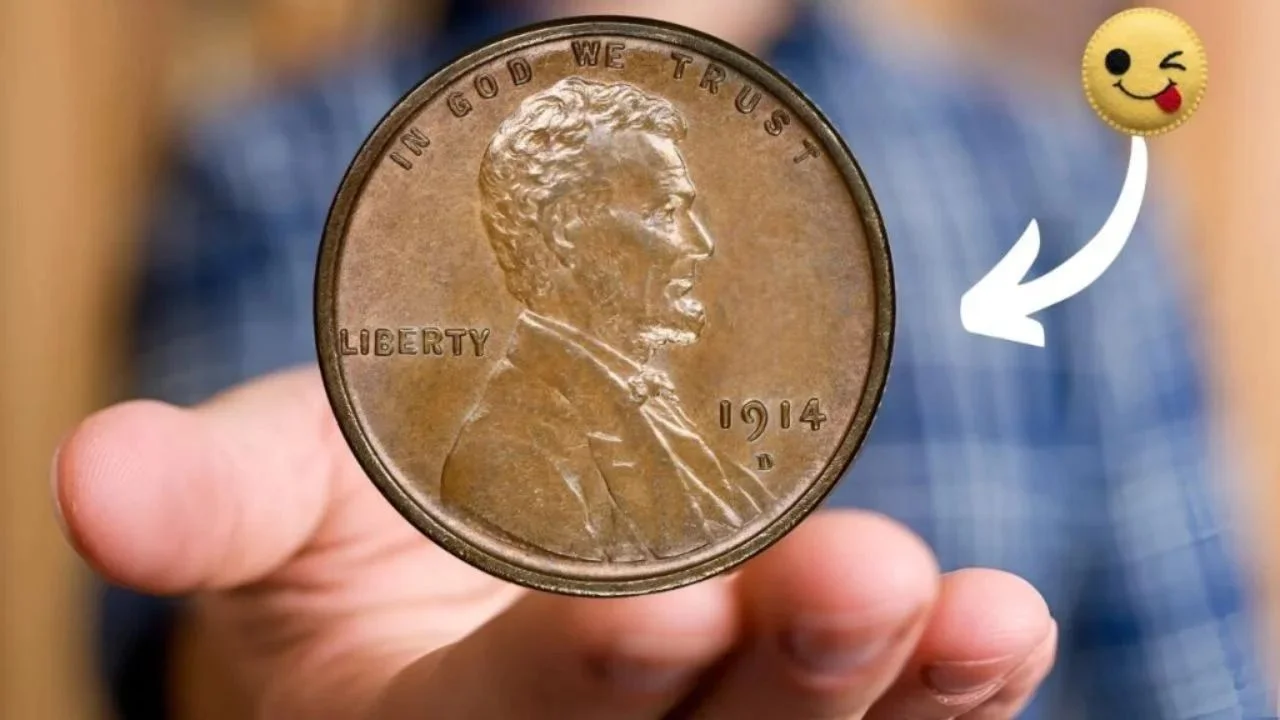
A routine home renovation in Ohio has turned into a headline-grabbing discovery. While removing an old wall clock, a family watched a single penny drop to the floor — a coin that may now be worth thousands.
What looked like an ordinary, darkened cent is believed to be a rare 1909-S VDB Lincoln Wheat Cent, one of the most sought-after coins in American numismatics. If authenticated, the find could represent a remarkable piece of U.S. history hiding in plain sight for more than a century.
Why This Penny Is So Important

In 1909, the U.S. Mint introduced the Lincoln cent to mark the 100th anniversary of President Abraham Lincoln’s birth. It was the first time a real historical figure appeared on a circulating American coin.
The coin was designed by Victor David Brenner, who placed his initials “V.D.B.” prominently on the reverse. Public criticism followed, with some arguing the initials were too bold. Within days, the Mint removed them.
Only a limited number of 1909 pennies struck in San Francisco — identified by the small “S” mint mark — carried those initials before production changed. That short window created one of the most famous key dates in coin collecting.
Estimated Value by Condition

As with any rare coin, condition dramatically impacts value. Even heavily circulated examples can command impressive prices.
| Condition (Grade) | Appearance | Estimated Value |
|---|---|---|
| Good (G-4) | Heavily worn, major details visible | $700 – $1,000 |
| Very Good (VG-8) | Clearer design, moderate wear | $1,200 – $1,800 |
| Fine (F-12) | Even wear, strong visibility | $1,800 – $2,500 |
| Very Fine (VF-20) | Light wear on high points | $2,500 – $4,000 |
| Extremely Fine (EF-40) | Sharp detail, minimal wear | $4,000 – $6,500 |
| About Uncirculated (AU-50) | Nearly full detail, slight friction | $6,500 – $10,000+ |
| Mint State (MS-60+) | No circulation wear | $15,000 – $100,000+ |
Final value depends on professional grading and market demand at the time of sale.
Authentication Is Critical
Excitement around the Ohio discovery has spread quickly through collector circles. But rare coins must be authenticated before any serious valuation.

Counterfeit versions of the 1909-S VDB exist, and even altered coins — where an “S” mint mark is added later — have fooled inexperienced buyers. Professional grading services examine weight, metal composition, strike characteristics, and microscopic details before assigning a grade.
The family has reportedly submitted the coin for expert review, a necessary step before deciding whether to keep or sell it.
How to Check Your Own Pennies
Stories like this naturally spark curiosity. While most old coins are not rare, it costs nothing to take a closer look.
Here’s what collectors recommend:
- Check the date carefully.
- Look for the small “S” mint mark under the year.
- Examine the reverse bottom for the “V.D.B.” initials.
- Never clean the coin.
- Handle only by the edges to prevent surface damage.
Cleaning is one of the fastest ways to destroy collector value. Even light polishing can leave microscopic scratches that significantly reduce worth.
Why Discoveries Like This Matter
Beyond the potential financial windfall, finds like this highlight how everyday spaces can preserve history. Coins were often tucked away for safekeeping, accidentally dropped into wall cavities, or left behind during renovations decades ago.
For collectors, the 1909-S VDB Lincoln cent represents more than scarcity. It marks a turning point in American coinage design and remains one of the most iconic keys to completing a Lincoln Wheat cent collection.
What Happens Next?
Once grading is complete, the Ohio family will face several options: hold onto the coin as a family heirloom, sell it privately, or place it in a major auction where competitive bidding could drive the price higher.
Whatever the outcome, a simple home project has transformed into a once-in-a-lifetime discovery — proof that sometimes history is hiding just behind the clock on the wall.