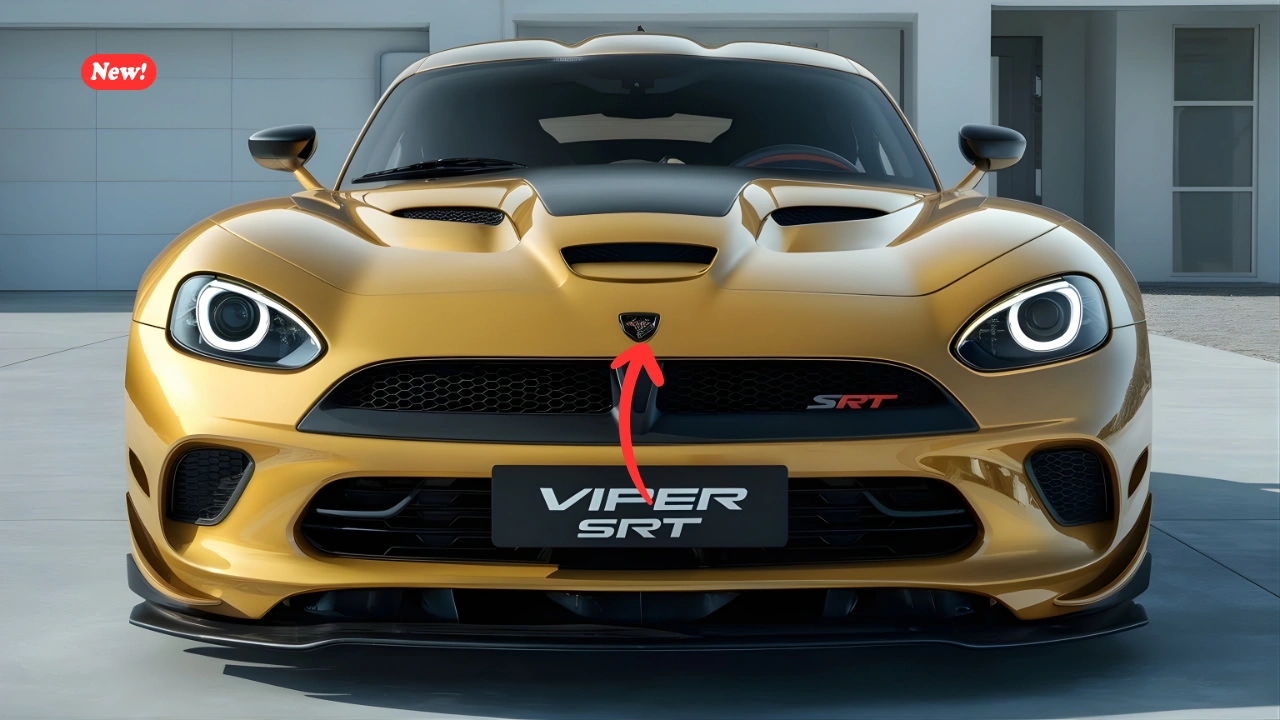
Dodge Viper 2026 Returns : Performance enthusiasts have long waited for the return of the legendary Dodge Viper. After disappearing from showrooms several years ago, the iconic American performance machine is rumored to be preparing for a dramatic comeback with a new generation expected around 2026.
Early industry leaks and insider discussions suggest the reborn Viper could deliver more power, advanced performance technology, and improved safety systems while preserving the raw, driver-focused identity that made it famous.

If confirmed, the new model could position itself as one of the most extreme front-engine performance cars on the market.
A Design That Stays True to the Viper Legacy
The new Viper is expected to maintain the unmistakable silhouette that defined earlier generations while introducing sharper aerodynamic detailing.
Long hood proportions remain central to the design, reinforcing the front-engine layout that has always distinguished the Viper from many modern mid-engine supercars.
Aggressive Front Styling

At the front, slim LED headlights and deep air intakes dominate the fascia. These elements not only give the car a more modern appearance but also improve airflow to the engine and braking systems.
Large cooling ducts are integrated into the front bumper to support high-performance driving conditions, particularly during track use.
Wide Stance and Functional Aerodynamics
From the side profile, the Viper’s signature long-nose layout continues, accompanied by muscular rear haunches and deep side air channels.
Carbon-fiber aerodynamic components help reduce weight while increasing downforce at high speeds.
At the rear, a large diffuser and quad-exhaust setup emphasize the car’s performance credentials while assisting airflow management.
The wide track and low ride height further reinforce the Viper’s track-focused intent.
Powertrain Rumors Suggest Up to 850 Horsepower
Power has always been the defining characteristic of the Viper, and the upcoming generation appears ready to continue that tradition.
While official specifications have not yet been confirmed, industry discussions suggest output could approach or exceed 850 horsepower.
Possible Engine Configurations
Several possibilities have surfaced regarding the powertrain.
One option could involve a modernized naturally aspirated V10, staying faithful to the Viper’s heritage while integrating updated engineering for efficiency and emissions compliance.
Another potential direction involves a twin-turbocharged V8 configuration designed to deliver higher output and improved torque delivery.
Both approaches would likely retain rear-wheel drive, preserving the pure performance character that Viper fans expect.
Transmission Options for Enthusiasts
Performance transmissions are expected to play a major role in the driving experience.
A dual-clutch automatic could offer lightning-fast shifts during aggressive driving, while a traditional manual gearbox would appeal to enthusiasts seeking a more mechanical connection with the car.
Lightweight Construction and Advanced Chassis Engineering
The upcoming Viper is expected to incorporate significant improvements in chassis design to support its powerful drivetrain.
An aluminum spaceframe architecture combined with carbon-fiber body components could reduce overall weight while increasing structural rigidity.
Adaptive Suspension and Track Capability
Advanced adaptive suspension systems would allow drivers to adjust ride characteristics depending on road conditions or driving style.
Comfort-oriented settings could improve daily usability, while track modes would stiffen the suspension for improved cornering performance.
Carbon-ceramic braking systems are also likely to be included, providing consistent stopping power during high-speed driving.
Active Aerodynamic Elements
Modern performance cars increasingly rely on active aerodynamic technology, and the Viper may follow this trend.
Adjustable spoilers, aerodynamic flaps, and underbody airflow systems could automatically adapt to speed and driving conditions.
These features improve stability during high-speed runs while maintaining efficiency during normal driving.
Interior Focused on the Driving Experience
The interior design philosophy of the new Viper is expected to remain driver-centric.
Rather than emphasizing luxury, the cockpit prioritizes performance, ergonomics, and high-quality materials.
Motorsport-Inspired Cabin
Carbon-fiber trim, Alcantara upholstery, and performance bucket seats are likely to dominate the cabin environment.
A flat-bottom steering wheel and large paddle shifters provide direct control over the car’s performance capabilities.
A digital instrument cluster could display real-time telemetry data such as lap times, engine temperatures, and performance metrics.
Modern Infotainment Integration
Although focused on performance, the Viper is expected to include a central infotainment system for navigation, connectivity, and smartphone integration.
Touchscreen controls and voice commands would allow drivers to access key features without distracting from the driving experience.
Advanced Safety and Driver Assistance
Earlier generations of the Viper were known for their raw, unforgiving character. The new model is expected to retain its performance focus while incorporating modern safety technologies.
Driver assistance features may include:
- Adaptive cruise control
- Blind-spot monitoring
- Stability and traction management systems
- Automatic emergency braking
- Performance-tuned electronic stability control
These systems help enhance safety without significantly interfering with the vehicle’s dynamic character.
Potential Variants for Different Drivers
Performance car manufacturers often offer multiple variants to serve different driving needs, and the Viper could follow a similar strategy.
Possible versions may include:
- Base performance model designed for street driving
- Track-focused variant inspired by past ACR models
- Limited-production editions targeting collectors and enthusiasts
Track-focused versions would likely feature larger aerodynamic wings, weight reduction measures, and race-optimized suspension setups.
Key Highlights of the Upcoming Viper
| Feature | Expected Details |
|---|---|
| Vehicle Type | High-performance sports car |
| Estimated Power Output | Around 850 horsepower |
| Drivetrain | Rear-wheel drive |
| Engine Possibilities | V10 or twin-turbo V8 |
| Chassis | Aluminum spaceframe with carbon components |
| Suspension | Adaptive performance suspension |
| Brakes | Carbon-ceramic performance braking |
| Interior | Driver-focused cockpit with digital displays |
| Safety | Modern driver-assistance technologies |
Why the Viper’s Return Matters
The return of the Dodge Viper would signal a renewed focus on high-performance gasoline sports cars during a period when much of the automotive industry is shifting toward electrification.
For enthusiasts, the Viper represents something increasingly rare: a powerful, uncompromising performance machine designed primarily for driving excitement.
If the rumored specifications become reality, the next-generation Viper could once again stand among the most dramatic and powerful American sports cars ever produced.