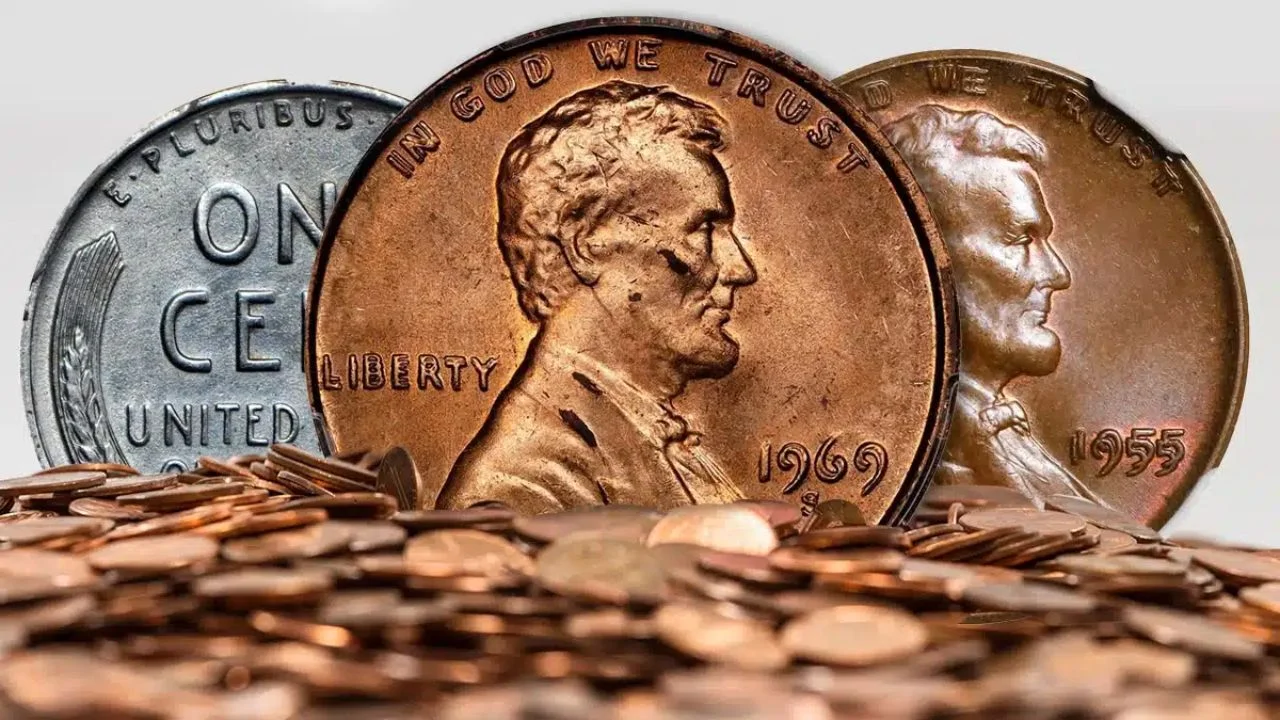
Most people treat pennies like pocket clutter. But in 2026, collectors are paying staggering sums for a handful of rare Lincoln cents that still turn up in circulation, estate sales, and old coin jars.
With renewed interest in tangible assets and collectibles, certain historic error coins and low-mintage varieties are commanding six- and even seven-figure prices. The key is knowing exactly what to look for — because the difference between a one-cent coin and a life-changing find can come down to a tiny detail.
Rare Lincoln Pennies at a Glance

Here’s a quick breakdown of the five most valuable Lincoln cents collectors are chasing right now:
| Coin | Mint Mark | Key Identifier | Estimated Value | Why It’s Rare |
|---|---|---|---|---|
| 1909-S VDB | S | “VDB” initials on reverse | $600 – $25,000+ | Limited early production |
| 1943 Copper | None, D, or S | Copper color; not magnetic | $100,000 – $1M+ | Wrong metal used during WWII |
| 1955 Doubled Die | None | Strong doubling on date & LIBERTY | $1,000 – $25,000+ | Major die error |
| 1969-S Doubled Die | S | Clear doubling on date & LIBERTY | $30,000 – $75,000+ | Extremely low known examples |
| 1982-D Copper Small Date | D | Small Date; weighs ~3.1g | $2,000 – $15,000+ | Transitional metal error |
1909-S VDB: The First-Year Controversy
When the Lincoln cent debuted in 1909, designer Victor David Brenner placed his initials “VDB” prominently on the reverse.
Public backlash followed, and production was halted quickly at the San Francisco Mint. That abrupt stop created one of the most famous key-date coins in American numismatics.

Well-preserved examples continue to anchor serious collections, with high-grade pieces selling for tens of thousands.
1943 Copper Penny: The Wartime Mistake
During World War II, the U.S. Mint switched from copper to zinc-coated steel to conserve materials for the war effort. But a few leftover bronze planchets from 1942 were accidentally struck with the 1943 date.
The result? One of the rarest and most valuable error coins ever produced.

Genuine examples are non-magnetic and display the familiar copper tone instead of the steel-gray appearance typical of 1943 cents. Fewer than 50 are believed to exist, and auction prices have exceeded $1 million.
1955 Doubled Die: The Famous Error
The 1955 Doubled Die Obverse cent remains one of the most recognizable mint errors.
A misalignment during die production caused dramatic doubling on the date and the word “LIBERTY.” Unlike minor errors that require magnification, this one is visible to the naked eye.
Because thousands entered circulation before being noticed, collectors still search for it — though pristine examples now command significant premiums.
1969-S Doubled Die: Once Mistaken for a Fake
The 1969-S Doubled Die Obverse cent initially caused confusion, with some early discoveries suspected to be counterfeits.
Further investigation confirmed authenticity, and today it stands as one of the rarest modern-era doubled dies. The doubling is bold and clear, especially on the date and lettering.
With very few verified examples known, values remain exceptionally strong.
1982-D Copper Small Date: A Transitional Rarity
In 1982, the Mint transitioned from mostly copper cents to zinc cores with a thin copper coating.
During the switch, a small number of Denver-minted Small Date cents were mistakenly struck on older copper planchets. These coins weigh about 3.1 grams, compared to 2.5 grams for zinc versions.
That small weight difference has turned ordinary-looking pennies into four-figure collectibles.
Why It Matters for Collectors Today
Interest in rare coins has surged as collectors look for hard assets with historical significance. Lincoln cents are especially appealing because they’re accessible — at least in theory.
Most valuable coins were discovered in everyday circulation, inherited collections, or forgotten jars. That possibility keeps the hunt alive.
For beginners, a magnifying glass, a small digital scale, and patience are essential tools. Never clean a coin, and always handle it by the edges to preserve potential value.
The Bottom Line
Not every old penny is valuable. But specific dates, mint marks, and mint errors can transform a one-cent coin into a serious investment.
In a market where rarity drives demand, these five Lincoln cents remain among the most coveted in 2026. And remarkably, they’re still out there — hiding in plain sight.